
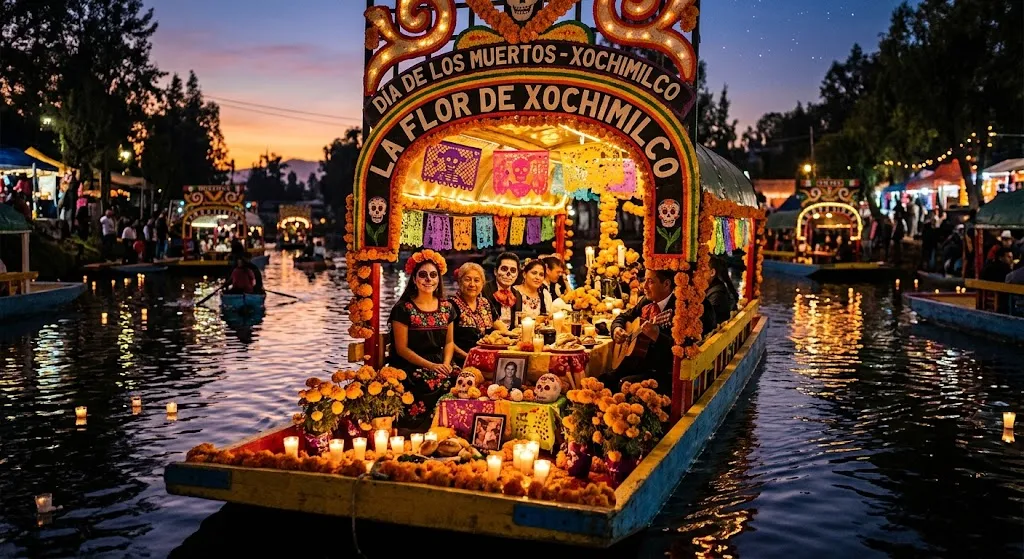
By the time October comes around, you start seeing signs of Día de Muertos all over Mexico. Markets fill with orange cempasúchil flowers, bakeries bring out trays of pan de muerto, and families begin gathering the things they’ll place on their altars. In some homes, preparations start days ahead. There are photographs to find, favorite dishes to cook, candles to buy, and little details that have a meaning only the family may know.
That’s what makes Day of the Dead in Mexico so personal. It’s not Halloween with a different name, and it isn’t simply a festival for visitors to watch. People take time to remember relatives and friends who are no longer here, often sharing stories, food, and memories while preparing their offerings. There can be laughter around the table and sadness too; the two aren’t really separate.
In Xochimilco, these dates bring another layer to a place already full of history and local customs. Its canals and traditional neighborhoods are well known, but visiting around Día de Muertos gives you a reason to look beyond the famous trajineras. The way people celebrate, remember their loved ones, and keep family traditions alive tells a story about Mexico that you won’t find just by taking a few pictures.
The easiest way to understand the difference is to look at what each celebration means to the people taking part. Halloween is largely a night of costumes, candy, scary stories, and parties. Day of the Dead has a different purpose. Mexican families use these days to remember relatives and friends who have passed away. According to traditional beliefs, the souls of the departed return to visit their families, so people prepare a place for them at home.
November 1 is traditionally associated with deceased children, while November 2 honors adults. Customs vary from one family and region to another, but remembering loved ones is always at the heart of the celebration.
You might see skulls, skeletons, and playful images of death, but they aren’t necessarily meant to frighten anyone. In Mexican culture, humor and affection often go hand in hand with remembrance. It’s one of the things that makes this holiday so different from what many American visitors are used to.
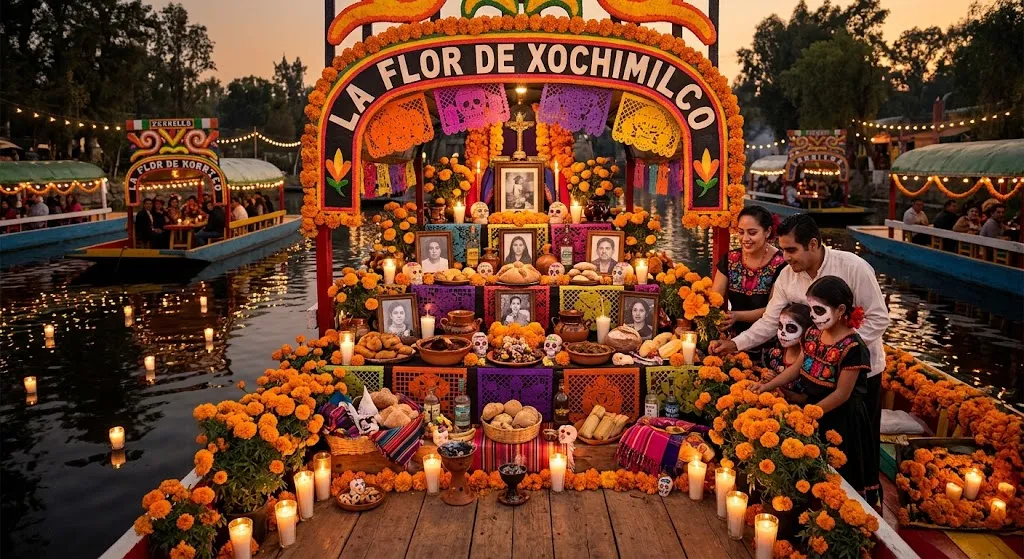
If you walk through a Mexican market during this season, you’ll probably notice large bundles of bright orange flowers. Those are cempasúchil, or Mexican marigolds, and they’re an important part of Day of the Dead.
Families use them to decorate their ofrendas, the altars they prepare for deceased loved ones. These aren’t identical from house to house. Some include just a few photographs and candles, while others are covered with food, flowers, and personal belongings.
A few things you’ll commonly find are:
Take a closer look at an ofrenda and you’ll often find little personal details: someone’s favorite candy, a bottle of the drink they loved, or an old family photograph. Those are the things that make each altar meaningful.
Xochimilco has always had a close relationship with water, agriculture, and community life. Its canals are part of what remains of the ancient lake system that once covered much of the Valley of Mexico. People still visit to enjoy the trajineras, but the neighborhood has its own traditions that go well beyond tourism.
Around Day of the Dead, local communities organize activities that can include altar displays, traditional performances, cemetery celebrations, and events inspired by Mexican folklore. You might also come across colorful decorations and flowers around the area's public spaces.
The exact program changes every year, so don't assume every event will be available throughout the season. Checking local announcements before your visit is a good idea.
There's a reason Xochimilco is so closely associated with trajineras. These colorful boats are part of the area's everyday tourist life, but the canals themselves have a much older story.
As you move along the waterways, you'll pass other boats, floating food vendors, musicians, and the chinampas that have been used for growing crops for centuries. It's a very different view of Mexico City from the one you'll get downtown.
Here's a detail many visitors don't know: Xochimilco is part of the Historic Centre of Mexico City and Xochimilco UNESCO World Heritage Site, inscribed in 1987. Its canals and chinampas preserve an important part of the region's pre-Hispanic agricultural history.
During the Day of the Dead season, some local celebrations bring the traditions to these waterways, giving visitors another reason to explore the area.
A nighttime visit is a different story altogether. The canals become quieter in some areas, the lights reflect on the water, and the atmosphere changes as the sun goes down.
One event worth looking into is La Llorona, a theatrical performance based on one of Mexico's best-known legends. The story tells of a woman whose cries can be heard near the water. There are different versions of the legend, but it has been passed down for generations and remains familiar to many Mexicans.
In Xochimilco, the show brings together theater, music, dance, and trajinera rides. Watching a performance on the water, surrounded by the canals at night, is quite different from sitting in a regular theater.
A little planning will save you time, especially if you're visiting during one of the busiest weekends of the year.
There’s a lot to see in Mexico City, and you could easily spend your entire trip visiting museums, restaurants, and historic buildings. But if you’re here during Day of the Dead, taking a little time to explore Xochimilco gives you a different perspective.
You get to see a neighborhood with a long history, learn about traditions that families still practice, and enjoy a part of the city that feels very different from its busy central streets.
A few things make the visit worth considering:
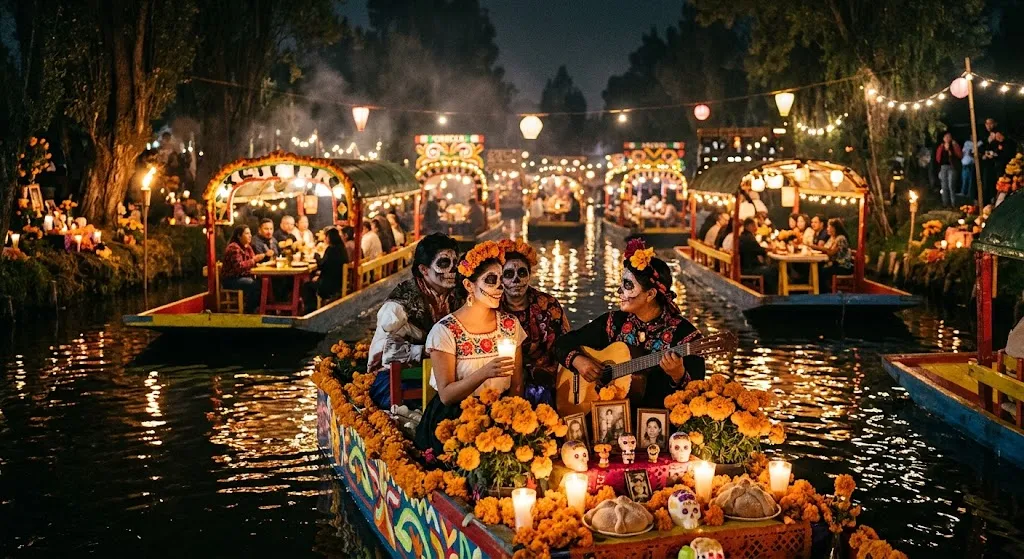
If you’d like to spend some time on the canals without worrying about transportation or organizing every detail yourself, take a look at the Xochimilco experience offered by Mexican Tales.
The tour includes transportation from a meeting point in Mexico City, a private trajinera ride, a local host, a Mexican snack, a first round of drinks, and traditional games like lotería. You’ll have around two hours on the water to enjoy the ride and get to know this side of the city.
If you’re planning your visit around Day of the Dead, it’s worth checking the local festivities and dates in advance. And if you’d like to explore other experiences, you can visit the Mexican Tales website, contact the team, or reach out directly through WhatsApp.
Ready to see Xochimilco from the water? Make room for a different kind of outing during your stay in Mexico City and enjoy the canals with a local host.